Energy recovery is becoming the new corporate retreat trend for 2026 — replacing the traditional gala dinner with a genuinely restorative experience.
For years, the annual corporate travel trip followed a fairly simple formula: book a beautiful resort, run a few team building games, close with a lavish gala dinner. This formula has been around long enough to become the default — and long enough to start showing its limits.
Heading into 2026, a clear shift is taking place in how businesses approach the idea of a wellness retreat for their employees: rather than measuring success by how extravagant an event looks, more and more organisations are starting to ask a more substantive question — "After this trip, has our team genuinely recovered its energy?"
This article examines the energy recovery trend reshaping how businesses organise retreats in 2026, and the specific elements needed for a trip to deliver genuine restorative value, rather than simply functioning as another entertainment event.
1. Why Is the Corporate Concept of "Wellness Retreat" Changing?
From "Indulgence" to "Recovery"
The traditional model treats the company trip as a reward after a year of work — focused on luxury, good food and entertainment. The model emerging in 2026 takes a different approach: treating the trip as a deliberate intervention aimed at restoring the mental and physical energy depleted through work.
This difference sounds subtle but has a significant impact on programme design: a trip built around "indulgence" prioritises grand events and packed schedules; a trip built around "recovery" prioritises natural surroundings, quiet moments and a genuinely slower pace.
Pressure From the Growing Prevalence of Burnout
Occupational burnout is no longer a novel topic, but its growing severity is forcing many businesses to reconsider what role a retreat should actually play. A single lavish evening gala dinner simply cannot resolve months of accumulated exhaustion — and an increasing number of business leaders are beginning to recognise this.
A New Generation of Employees Who Value Substance Over Spectacle
Younger members of the workforce increasingly prioritise meaningful experiences over outward displays of extravagance. A trip designed to genuinely help them rest, connect with nature and bond authentically with colleagues is typically valued far more highly than an event that only looks good on social media.
2. Three Characteristics of the 2026 Energy Recovery Retreat Trend
🌿 Characteristic 1: Prioritising Natural Surroundings Over Artificial Amenities
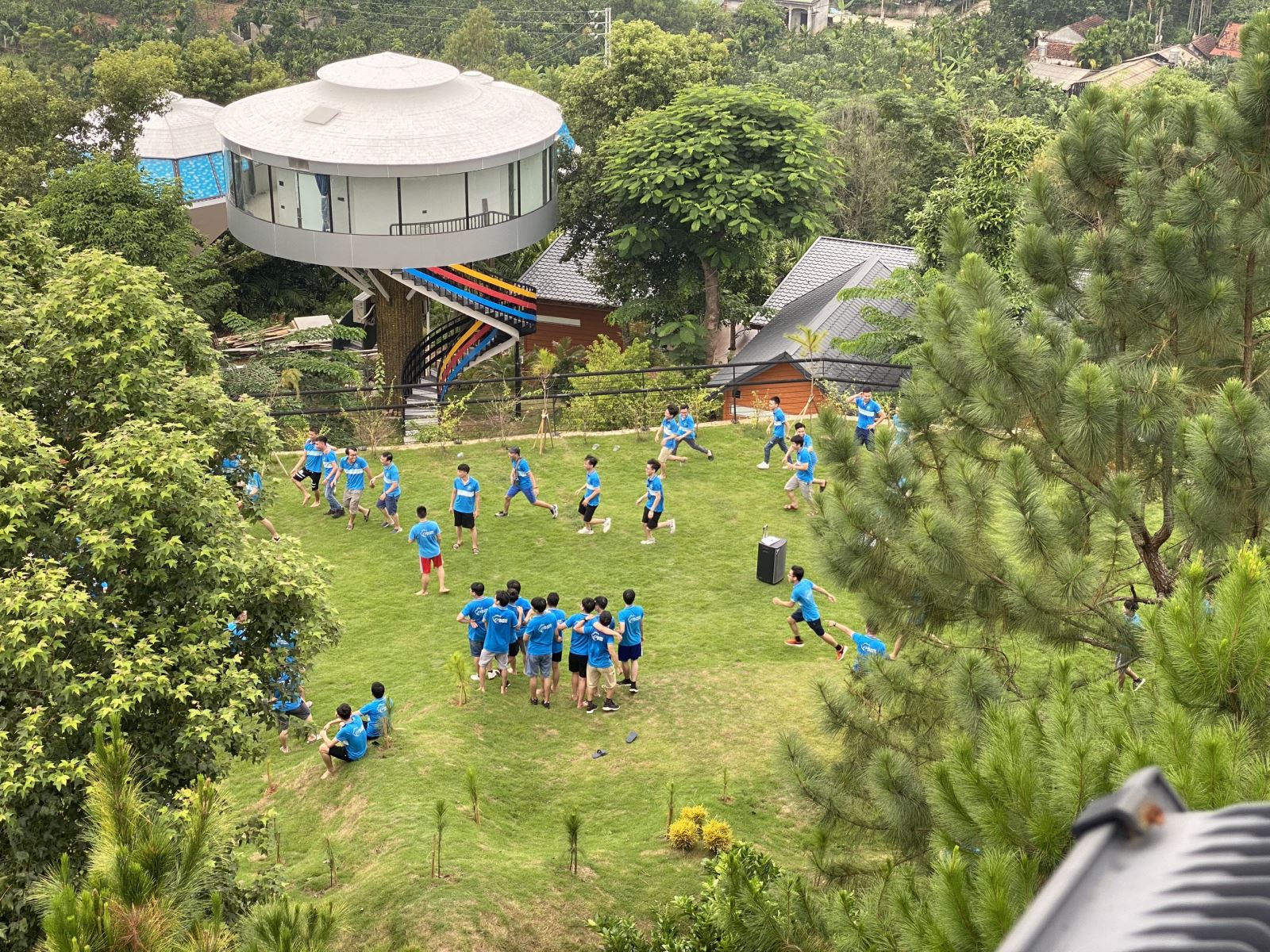
The 2026 trend shows a clear shift away from high-amenity resorts that lack any genuine connection to nature. Instead, businesses are seeking out spaces with real mountains, real forest, genuinely clean air — where the energy recovery process happens naturally, without the need for expensive spa interventions.
🌿 Characteristic 2: A Schedule With Room to Breathe, Not Packed Full
An effective energy recovery programme doesn't try to fill every minute with activity. Instead, the itinerary is deliberately designed to leave space — time to walk through a pine forest, sit quietly with a view of nature, or simply do nothing at all.
🌿 Characteristic 3: Combining Light Physical Activity With Local Cultural Experience
Rather than relying solely on high-intensity team building or straightforward partying, 2026's energy recovery programmes typically combine gentle movement (cycling, walking, recreational sports such as disc golf) with local cultural experiences — creating a balance between physical activity and mental stillness.
3. The Specific Elements That Create Genuine "Energy Recovery"
Natural Sound Replacing Urban Noise
Research on Attention Restoration Theory by psychologists Rachel and Stephen Kaplan shows that natural environments — with the sound of wind, water and leaves — help the brain restore its capacity for concentration far more effectively than urban environments full of artificial stimuli.
Meditative-Quality Activities
Slow, gently repetitive activities — walking through a pine forest, sitting in quiet reflection, or taking part in traditional cultural rituals (such as a herbal steam bath in the custom of the Dao highland people) — have an effect similar to meditation, naturally lowering cortisol, the stress hormone.
Local Cuisine Instead of a Standard Hotel Menu
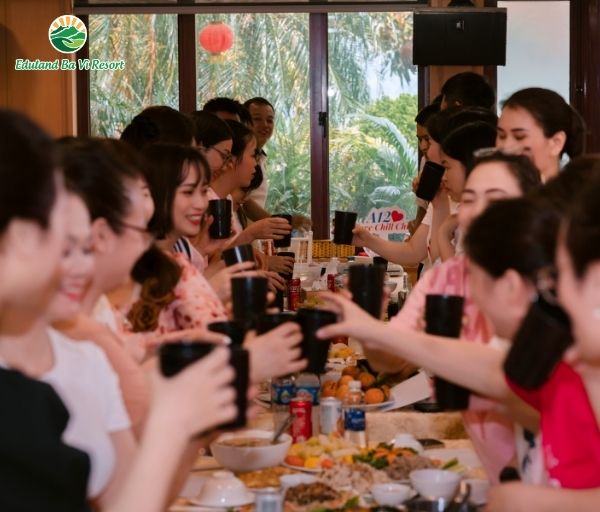
Enjoying dishes made from fresh local ingredients — rather than a standard hotel buffet menu — also contributes to the overall recovery experience, engaging the senses in a way that feels more genuine and novel.
.png)
4. Where Should Businesses Start When Applying This Trend?
Ask the Right Question Before Planning
Rather than starting with "where should we go?", start with "what does our team actually need to recover?" The answer will shape the entire programme design — from location and schedule through to the type of activities included.
Balance "Work" and "Recovery" Segments
If the trip still needs a strategy meeting or year-end review, schedule it into a fixed, concise block of time — so the rest of the trip is genuinely dedicated to recovery, without the lingering feeling of "still being at work."
Choose a Venue With Both Genuine Nature and Suitable Facilities
The ideal venue for this energy recovery trend needs to offer, simultaneously: genuine natural surroundings (mountains, forest, a river), facilities sufficient for a formal programme segment if needed, and a reasonable travel distance that doesn't consume excessive time and energy before the trip even begins.
Experiential destinations that combine education and nature in the Ba Vi region — such as Eduland Ba Vi — are among the models currently meeting this trend quite well, with pine forest surroundings, gentle activities such as cycling and disc golf, and local cultural experiences such as a traditional herbal steam bath practised by the Dao people — all within the same grounds, roughly 60km from Hanoi.
🔗 See: Eduland Ba Vi — Experiential Destination Near Hanoi
Conclusion
The 2026 wellness retreat trend for businesses is shifting clearly away from the "luxurious indulgence" model towards a model of deliberate energy recovery. This shift reflects both a growing awareness of burnout in the modern workplace, and a broader recognition that businesses are starting to view the retreat as a strategic investment in team mental health — not simply an occasion for celebration.
For businesses planning their next trip, the question worth asking is no longer "what event should we organise" — but "how will this trip help our team actually recover."
Frequently Asked Questions (FAQ)
How does the energy recovery retreat trend differ from traditional corporate travel? Traditional corporate travel typically focuses on grand events and a packed schedule of entertainment. The energy recovery trend prioritises natural surroundings, an itinerary with genuine room to rest, and restorative activities rather than purely entertainment-focused ones.
Why does natural surroundings matter so much for energy recovery? Research on attention restoration by psychologists Rachel and Stephen Kaplan shows that natural environments help the brain restore its capacity for focus more effectively than urban environments, thanks to gentle natural stimuli such as the sound of wind, water and trees.
Can smaller businesses apply this trend without a large budget? Absolutely. This trend doesn't require an expensive premium resort — it requires genuine natural surroundings combined with a sensibly designed itinerary that leaves room for the team to actually rest, rather than following a packed schedule.
How can a business tell whether a trip genuinely delivered energy recovery? This can be observed through employee feedback after the trip: did they feel genuinely rested or still as tired as an ordinary working day, and whether performance and morale show a clear improvement in the weeks that follow.
Is Eduland Ba Vi suitable for organising an energy recovery retreat for a business? Eduland Ba Vi offers pine forest surroundings, gentle activities and local cultural experiences suited to this trend, along with an event hall and accommodation to accommodate a formal programme segment if needed. Contact 0399.131.135 for advice on a programme suited to your group's size.
📍 Eduland Ba Vi Resort
📞 Hotline: 0399.131.135
🌐 Website: https://edulandbavi.vn
✉️ Email: edulandbavi@gmail.com
🚩 Address: Da Chong Village, Ba Vi Commune, Hanoi